The US and Lebanon’s trilateral trap
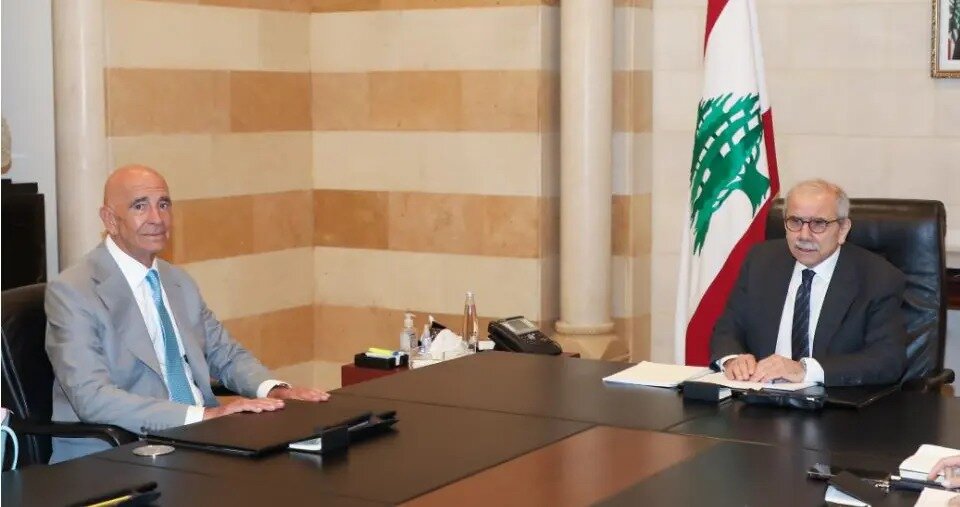
BEIRUT — The United States is intensifying pressure on Lebanon to abandon the existing military “mechanism” overseeing the southern front and move instead toward a Washington-sponsored trilateral committee that would pave the way for political-security arrangements with Israel.
Meanwhile, a U.S. source told Al Hadath Saudi channel that the ceasefire agreement and UN Resolution 1701 are no longer capable of delivering the security Israel seeks along the border, a position supported by Washington.
He added that the Lebanese should stop overemphasizing the Armistice Agreement, because what is required is a Lebanese–Israeli security agreement. There is no need for the mechanism as a negotiating framework involving an unhelpful French–UN partnership. What is needed instead is high-level political negotiations, following the Syrian model, under US sponsorship, leading to an agreement that guarantees the creation of a buffer security zone along the border—one that Washington would later transform into an economic zone.
This shift—quietly but firmly advanced by American officials—marks a qualitative escalation: from monitoring ceasefire violations to imposing a negotiating framework that elevates civilian and ministerial representation and reframes the conflict as a technical problem to be managed, rather than an occupation to be confronted.
The timing is telling; as legal summons were issued against pro-Resistance journalists who criticized President Joseph Aoun’s recent remarks to the diplomatic corps—remarks widely viewed as dismissive of the Resistance and its social base—political life otherwise slowed, save for an “urgent” visit by Speaker Nabih Berri to the presidential castle.
While the precise trigger of that meeting remains opaque, one fact is unmistakable: the presidency’s rift is no longer primarily with Hezbollah, which had sought to keep channels open over the past year, but with the people of the Resistance—who now see a widening gap between rhetoric about sovereignty and the lived reality of exposure and neglect.
Against this backdrop, the U.S. proposal to raise the level of talks—from a military mechanism to a trilateral, politically anchored committee—has gained traction in official circles.
Washington and Tel Aviv are pressing for ministerial participation, a move Prime Minister Nawaf Salam appears ready to accept, while President Aoun reportedly hesitates.
Paris, sidelined from southern oversight, is maneuvering to reinsert itself via a March 5 international conference to support the Lebanese army, preceded by Army Commander Gen. Rodolphe Haykal’s visit to Washington and a preparatory meeting in Qatar.
Supporters frame this as pragmatic diplomacy; critics see conditionality. There are mounting fears that U.S. assistance will be tied to compliance with demands—chief among them accelerating weapons restrictions north of the Litani.
The record of the past year offers little reassurance: Washington has consistently aligned with Israel’s preferences, from enforcement disputes to the interpretation of ceasefire terms. Hints of American “concern” have changed nothing on the ground.
The pressure goes beyond disarmament. US officials increasingly question the utility of UNIFIL and the military mechanism itself, arguing that a broad military framework is unnecessary if American officers can directly coordinate between Israeli and Lebanese counterparts.
In practice, this would hollow out international mediation and fast-track political talks under US sponsorship—outside Naqoura, in a venue chosen precisely because the file is no longer treated as technical but decisively political. American officials openly cite the “Syrian experience” as a model.
What is being prepared is not merely a new committee, but a new reality. Decision 1701 is treated as passé; the 1949 Armistice as obsolete. Even the infamous May 17 agreement is no longer the benchmark.
Instead, Lebanon is being nudged toward an “interim” security deal with a political frame, with normalization deferred to later stages. The immediate ask, however, is stark: a de facto declaration that Israel is no longer an enemy.
From there, the logic follows—reclassifying resistance as illegitimate, criminalizing its networks, and opening the door to a second phase of disarmament.
Domestically, a faction increasingly embraces this course, animated by a fatalism that casts defiance of Washington—especially under Donald Trump—as politically suicidal.
Trump’s recent remark in Davos that the United States would “do something” about Hezbollah, devoid of details, only amplified the threat environment. Israeli readiness levels have risen accordingly, amid speculation about regional escalation involving Iran.
The paradox is painful. As southern residents assess the wreckage of their homes after renewed Israeli strikes, the Lebanese state signals deeper accommodation—announcing openness to civilian participation in a mechanism Washington and Tel Aviv have already undermined.
Leave a Comment